If you’ve been searching for better ways to teach building sentences in kindergarten or first grade, you’re in the right place. Teaching simple sentences sounds straightforward — but if you’ve actually tried it, you know it’s anything but. Let’s break down why it’s hard, what your students actually need, and how to make it finally click.
Why Building Simple Sentences Is So Hard for Young Writers
How many times have your students “written a sentence” during a writers workshop and it just says “my dog” or “mom dad cat”? You do a little internal sigh, smile at them anyway, and think — okay, we need to go back to basics.
The truth is, they aren’t being lazy. They genuinely believe that IS a sentence. To them, those words feel like a complete thought — and honestly, that’s a totally normal place to start. The good news is, once you show them what’s missing, it clicks faster than you’d expect.
They Don’t Yet Understand Subject and Predicate
Before we can fix the problem, it helps to know where the confusion is coming from. Most young writers don’t yet understand that a sentence needs two things: someone or something to talk about, AND something happening. Without both pieces, what they’ve written is just a string of words — not a sentence.
They Write Phrases Instead of Complete Sentences
Phrases like “my dog” or “the big cat” feel finished to a five or six year old. They named something — so why isn’t that enough? This is exactly why teaching subject and predicate explicitly, in kid-friendly language, makes such a big difference.
What Kindergarten and First Grade Students Actually Need to Understand First
Before jumping into any activity, a little direct instruction goes a long way. Here’s how to break it down in a way that actually makes sense to young learners.
Teaching the Concept of a Subject (Who or What)
We like to call this the naming part. Who is the sentence about? What is it about? Connecting it to nouns your students already know is a great starting point — they’ve likely been talking about nouns for a while, so this just gives that concept a new job.
Teaching the Concept of a Predicate (What They Do)
This is the telling part. What is that person or thing doing? Connecting it to verbs makes it concrete and familiar. Once students understand that every sentence needs a naming part AND a telling part, things start to come together.
How to Know When a Sentence Is “Complete”
A great rule of thumb to give students: Can you picture it? Can you see who it is AND what they’re doing? If the answer is no, the sentence isn’t done yet.
A Great Way to Practice Subject and Predicate with Kindergarten Students
Once your students have the basics down, it’s time to practice — and this is where things get fun. Here are three low-prep ways to reinforce the naming part and the telling part before ever asking students to write independently.
Try the Reporter Game
Turn your students into news reporters. Show them a picture and have them “report” on it. Who is in the picture? What are they doing? It naturally walks them through subject and predicate without it feeling like a grammar lesson at all. This works beautifully as a whole group warm-up before students move into building sentences on their own.

Use Charades to Act It Out
This one is a class favorite. Pull out a set of word cards and have one student act out what’s on the card while the rest of the class identifies two things: who is doing it and what they’re doing. It’s a little silly, a little chaotic, and incredibly effective. You can use the action cards from a sentence building activity for this — it ties the hands-on practice directly to the skill you’re teaching, and it’s a fun way to review subjects and verbs.
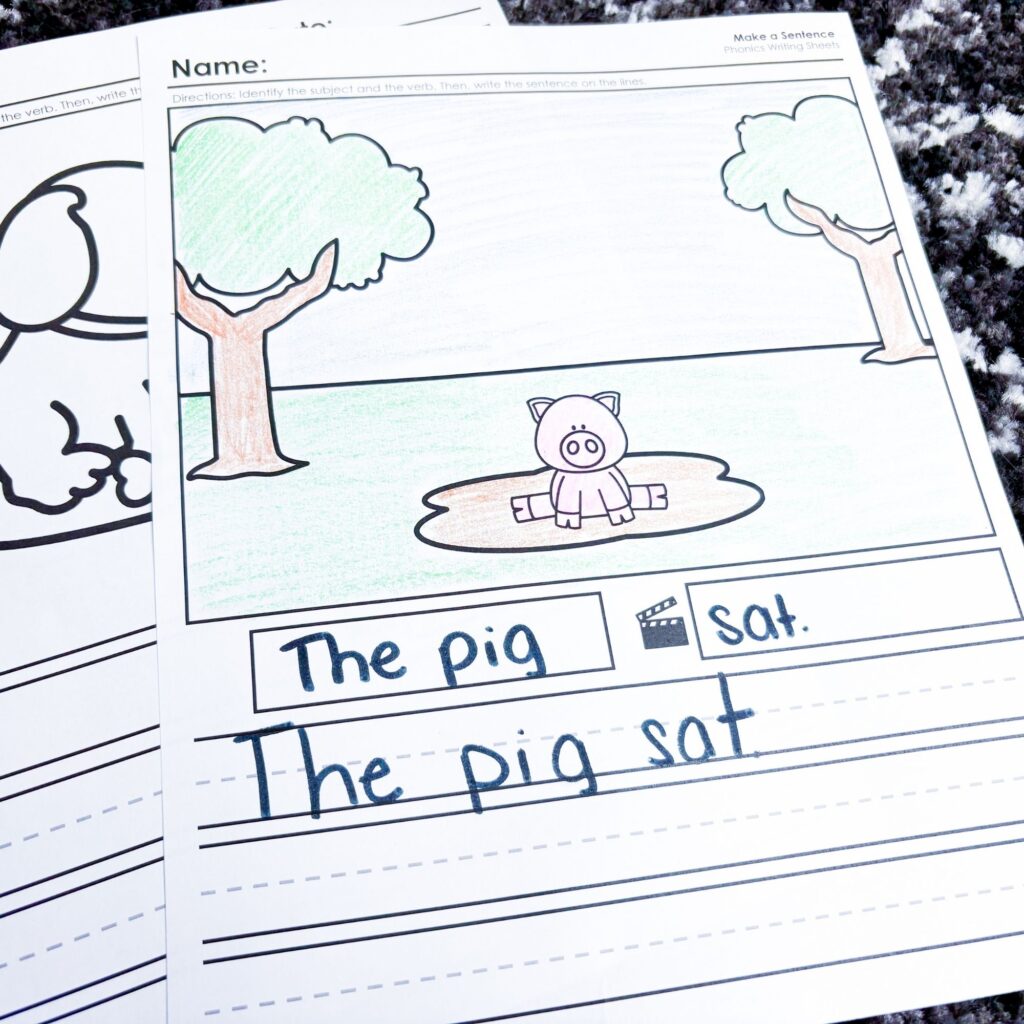
Use the Writing Sentences Activity for Whole Group, Small Groups, or Literacy Centers
The best part about these kinds of activities is how flexible they are. Use the reporter game as a whole group warm-up, charades in small group, and transition both into an independent center once students are ready to build sentences on their own. A good sentence building activity bundle will grow with your students — and save you from reinventing the wheel every single week.
👉 TRY SENTENCE BUILDING WORKSHEETS
Common Problems You’ll See (and How to Fix Them)
Let’s talk about the two most common roadblocks you’re going to hit — because knowing what to expect makes it so much easier to respond in the moment instead of scrambling for a plan.
“My Students Keep Writing Fragments” — Here’s What to Do
When a student writes “my dog” and looks up at you totally proud of themselves, resist the urge to just correct it. Instead, ask them: “Okay, what is your dog DOING?” That one question is usually enough to get them there. You’re essentially coaching them to find their telling part without making them feel like they got it wrong. Over time, you want them asking themselves that question automatically before they ever put pencil to paper which is the ultimate goal of the sentence activity.
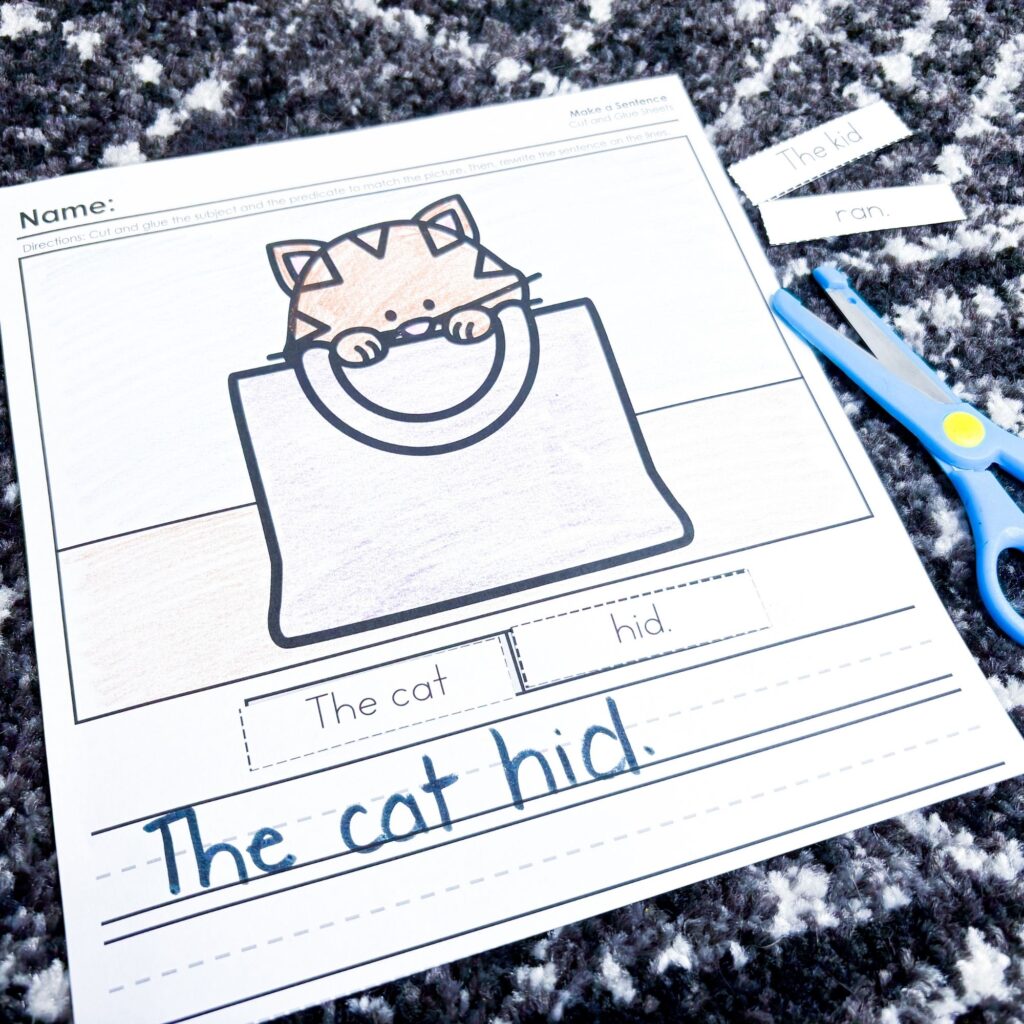
A sentence building activity is great for this exact moment — when students can physically move a subject card and pair it with an action, they start to feel what a complete sentence needs before they have to write it.
“They Mix Up the Subject and Predicate” — Try This Instead
This one usually comes down to the order feeling unnatural to them. Go back to the reporter framing — who first, then what they’re doing. If a student is consistently flipping it, try having them say the sentence out loud before building or writing it. Saying it out loud almost always self-corrects the order because it sounds weird to them when it’s wrong.
Review and Reinforce Simple Sentences All Year Long
Here’s the thing about sentence building — it’s not a unit you teach once and move on from. It needs to show up consistently, especially for your students who are still shaky on it in spring. The good news is, you don’t have to reinvent the wheel every time.
How to Revisit Sentence Building Without Losing Student Interest
The key to keeping review from feeling like review is changing the context, not the skill. If students built sentences about animals in the fall, do it again in the winter with a different theme. The structure stays the same, but it feels fresh to them. That’s honestly one of the biggest reasons a variety of grammar worksheets is worth having in your back pocket — you’re not making new materials, you’re just swapping the theme.
Switching It Up with Seasonal and Holiday Themes
Themed activities also have a sneaky benefit — they’re naturally engaging without you having to sell it. When kids see a Halloween or Valentine’s Day version of something, they’re already interested before you’ve said a word. Use that to your advantage, especially during those stretches of the year when focus is hard to come by and students have the attention span of a squirrel.
Want to try a spring-themed sentence-building activity for free? CLICK HERE
Practice Fine Motor Skills with a Sentence Writing Center Activity

Who doesn’t need more fine motor skill practice? Cut and glue sentence building worksheets are one of my favorite ways to make sentence writing practice feel like a fun activity instead of just another worksheet. Students match the subject and predicate to the picture to build the sentence, then cut and glue the pieces into place in the right order. It’s hands-on, it’s phonics-based, and it sneaks in fine motor skill practice while students are focused on the sentence itself. Win-win!
What I love most is how naturally these work as a sentence writing center. Once you model it once or twice, students can use them as independent work without needing you standing right there. That means you’re freed up for small group while your kids are genuinely engaged in practicing building and writing sentences with both a subject and a predicate.
These interactive worksheets also work beautifully as a follow-up to any of the whole group activities we talked about earlier. Students have already identified the naming part and the telling part — now they’re applying it in a completely different format, which is exactly how skills move from practice into long-term memory.
Ready to Make Building Sentences Easier? Grab This for Your Classroom
If you’ve been nodding along to any of this, you’ll want to check out the sentence building worksheets which are included in the Kindergarten Making Sentences Bundle. They have everything you need to introduce subject and predicate, practice building simple sentences, review throughout the year, and create more independent writers.
No more scrambling for materials. No more “my dog” sentences with nothing after them. Just a simple, repeatable engaging activities that work!