I’m sure we have all witnessed a toddler proudly point to a bright yellow bus or insist they want the blue cup. Children are naturally drawn to color. Many times, teaching colors is one of the first academic concepts we introduce to kids. This begins in the baby and toddler years, and continues through preschool and beyond. Understanding how to teach colors in preschool can help children build a strong foundation for language, early math, and cognitive development. This is exactly why I use colors as the focus of my first Preschool and Pre-K Colors Math Unit. This unit contains some of my favorite ways to teach colors in preschool!
Why Teaching Colors in Preschool Matters
Understanding how to teach colors in preschool starts with recognizing just how important this foundational skill really is. Colors are one of the earliest ways young children begin to describe and understand the world around them.
Before children have a large vocabulary, color becomes one of their most powerful descriptors. They will probably ask for the red ball, notice the green grass, or point out the yellow school bus long before they can describe size, texture, or shape. Learning colors also supports communication, creativity, observation skills, and self-expression. This list could definitely go on! Colors also connect to safety as children begin recognizing important visual cues in their environment.
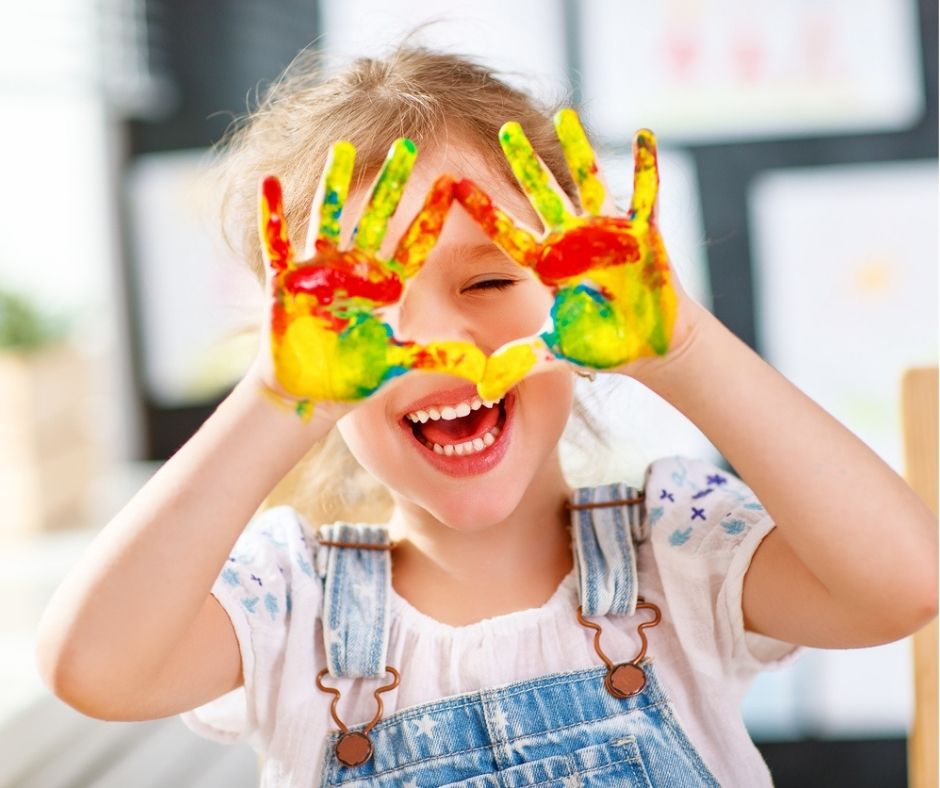
Bright colors naturally also capture young children’s attention, which is one reason toys, books, and classroom materials for this age group are so colorful. These vivid visual experiences help create strong neural connections as children learn about the world around them.
Perhaps most importantly, color recognition lays the groundwork for early math. Before children understand numbers, they’re already comparing, analyzing data, classifying, and sorting colors. When a child groups all the red blocks together or sorts pom-poms by color, they’re practicing foundational math skills that they’ll continue to build on throughout their education.
When Do Preschoolers Learn Colors?
Most children begin recognizing and naming colors sometime between 18 months and 3 years of age. By the time children enter preschool or pre-K, many can identify most basic colors. In fact, many children in preschool and pre-K are beginning to compare shades, mix colors, and confidently use color words in everyday conversation. Of course, like all developmental milestones, some children will master colors earlier, while others may need more time and repeated exposure.
My Favorite Ways to Teach Colors in Preschool
There are countless ways to teach colors in preschool, and the best lessons are often the ones that feel like play. Below are some of my favorite strategies for introducing and reinforcing color concepts, along with simple activity ideas that you can easily incorporate into your classroom.
#1 Introduce One Color at a Time
Rather than teaching every color at once, spend time focusing on single colors. Having a “Color of the Day” or even a themed color week is such a fun way to teach colors in preschool. This also ties in nicely with certain holidays.
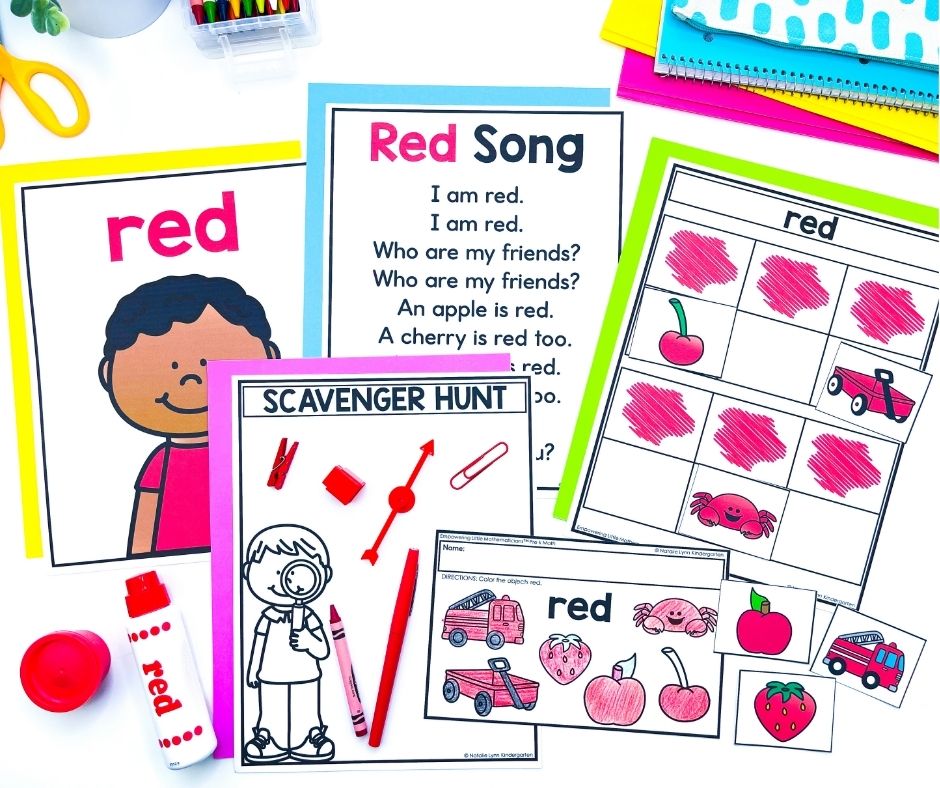
Students love doing themed color weeks close to St. Patrick’s Day and Valentine’s Day. You can also read books featuring the color of the day, play with matching toys, and complete simple activities centered around it. Focusing on one color at a time gives children plenty of opportunities to make meaningful connections before moving on to the next.
#2 Use Real Objects Whenever Possible
Students love learning through hands-on experiences. Instead of relying only on worksheets or flashcards, encourage children to find colors in their everyday environment. Sorting blocks or dot stickers into like colors, noticing what classmates are wearing, or searching for colors on a nature walk all make learning much more meaningful because children are connecting colors to the world around them.
#3 Incorporate Music and Movement
Preschoolers love to move! There is also evidence that movement helps learning stick. Songs about colors are another great way to teach colors in preschool. All while making learning fun and reinforcing vocabulary through repetition. Some classroom favorites I include are: I Can Sing a Rainbow, Colors Everywhere (also known as Orange Is a Carrot), and The Color Song. You can also make up your own movement games by calling out a color and having children find something that matches around the room.
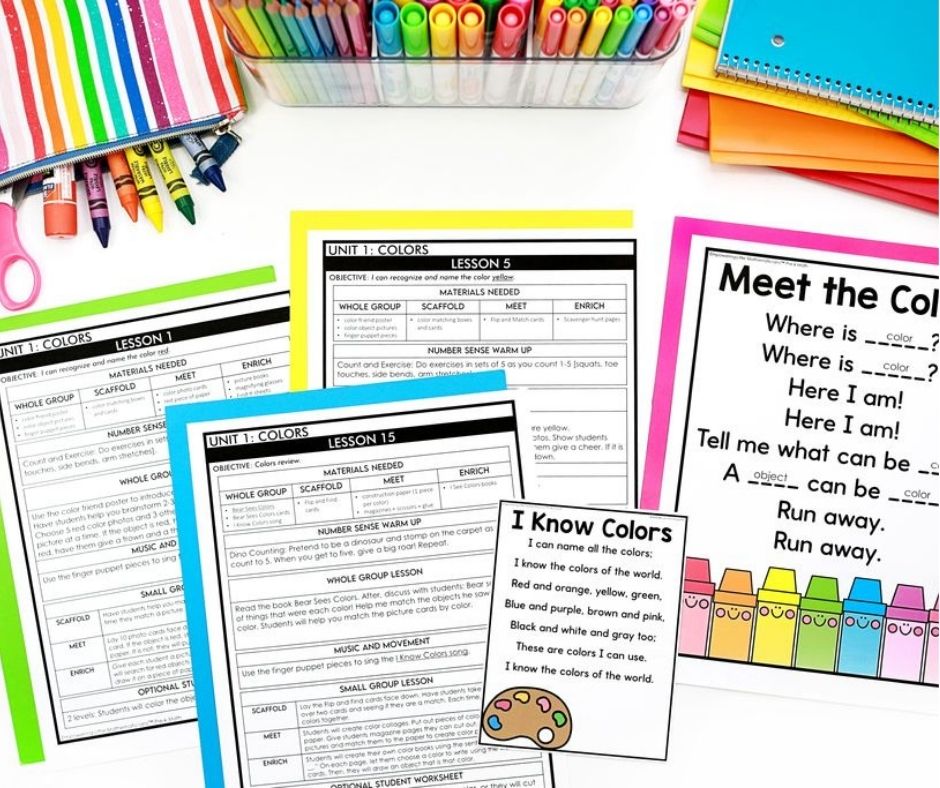
The Colors Unit in the Empowering Little Mathematicians Preschool Math Curriculum includes original songs for every lesson! Songs to learn each color and songs to review and celebrate them all.
#4 Review Colors Throughout the Day
Color learning doesn’t have to happen during a designated lesson. Some of the best teaching moments happen naturally throughout your daily routine. Ask children to hand you the green marker, notice who is wearing blue, or point out colorful objects during transitions. These simple conversations provide the repetition children need without adding extra planning to your day or making things feel forced.
#5 Explore Colors Through All Subjects and Activities
Colors naturally connect to so many areas of learning. Painting, color mixing, sensory bins, and simple science experiments all help children develop a deeper understanding of color.
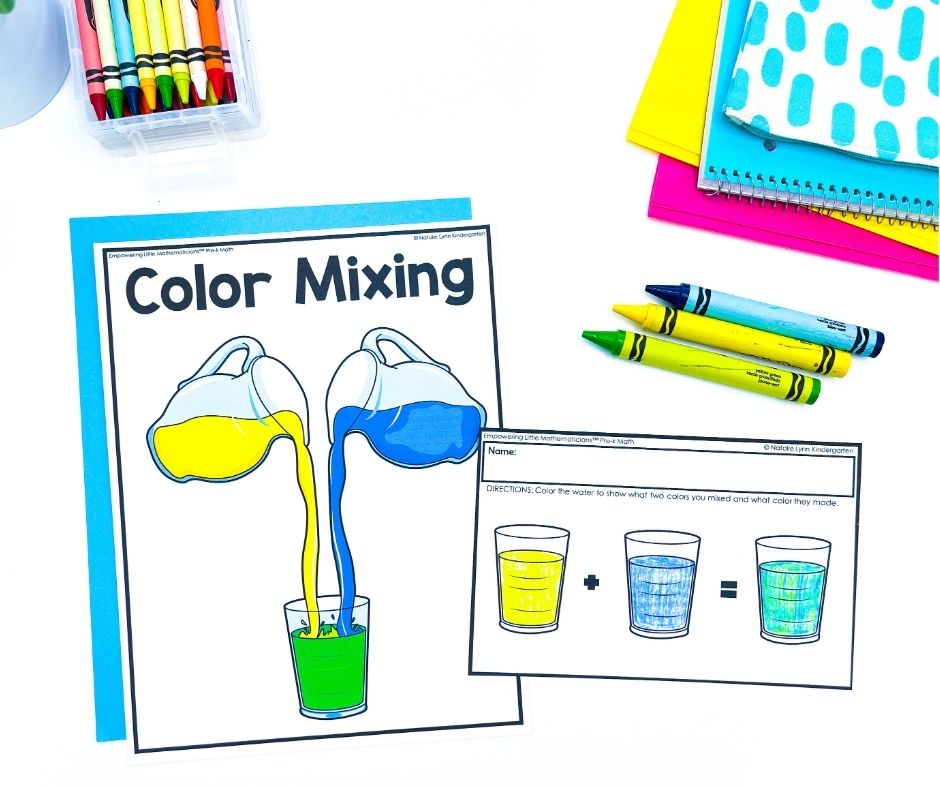
Integrating colors into multiple subjects also helps children remember what they’ve learned because they experience the concept in different ways.
#6 Teaching Colors Through Guided Math
Finally, I love teaching colors in preschool and pre-K by combining them with early math concepts.
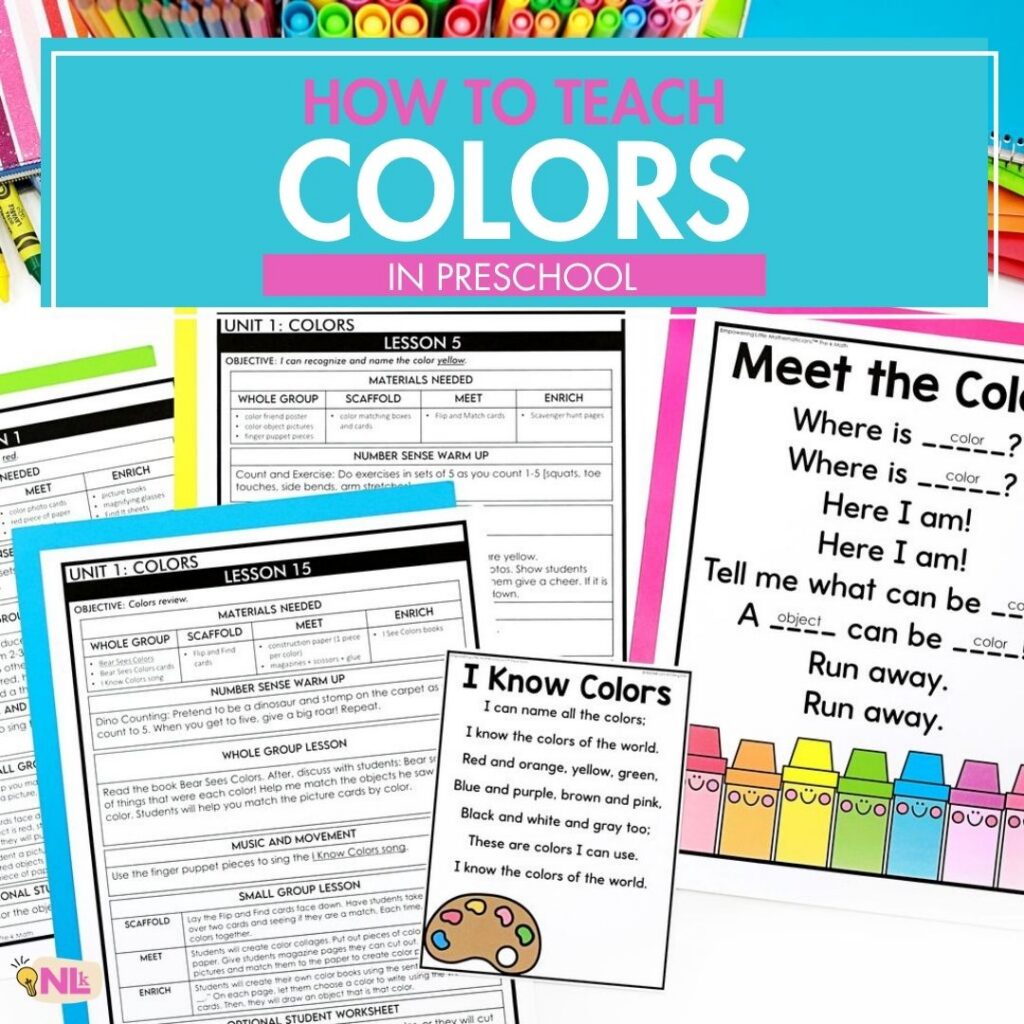
That’s exactly why I created my Preschool & Pre-K Guided Math Colors Unit. This first unit in my Preschool and Pre-K Math Curriculum includes 15 complete lesson plans that guide students through learning colors while developing beginning math skills.
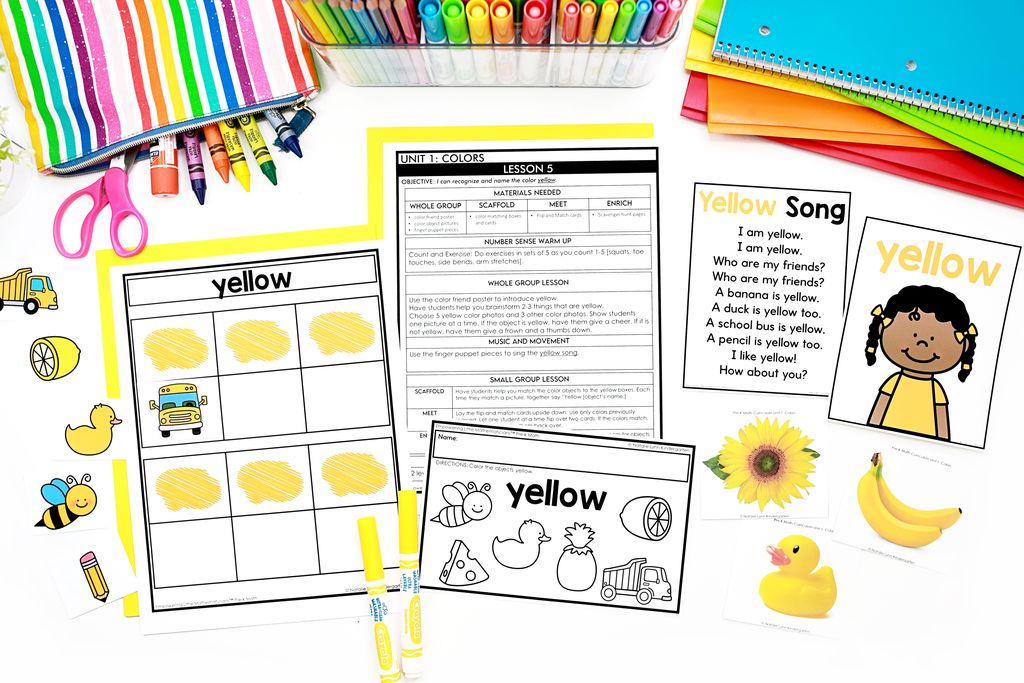
Each lesson in the unit includes:
- Number Sense Warm-Up: A quick math warm-up that takes just a few minutes and almost always includes moving and grooving!
- Introduce the Color: During a short whole-group lesson (about five minutes), children are introduced to the color of the day while exploring an early math concept.
- Color Sorting Activity: Students participate in a hands-on activity where they identify and sort the color of the day.
- Music and Movement: Every lesson includes an original color song, plus review songs to reinforce previously learned colors. Finger puppets are also included to make the songs even more fun.
- Small Group Extensions: Students will look deeper at the math objectives in their small groups. Small groups are differentiated for scaffolding, meeting and enriching the skill.
- Optional Worksheets: A daily short student practice worksheet is included in each lesson so students can continue practicing. These can even be sent home, or used as extra practice throughout the day.
The unit also includes 10 low-prep math centers, an end-of-unit assessment, and both American and British spelling versions, making it easy to adapt for different classrooms. You can find the unit on TPT here: Preschool & Pre-K Math Color Unit
Try a Free Lesson
If you’d like to see how these lessons work before purchasing the full unit, you can download my FREE Red Color Lesson.
Check Out This Resource From My Shop!
Preschool and Pre-K Math Lesson FREE SAMPLE Color Red Guided Math
This free sample includes a complete lesson plan, plus all the materials needed to teach the color red. Students will have fun singing A Red Color song, learning with finger puppet pieces, a color poster, real photo color cards, and printable math worksheets. It’s an easy way to experience how teaching colors through a math lens can be both engaging and meaningful for young learners. The structure of this lesson is the same as all of my color lessons, so you will really get a sense of how the full color math unit works. I hope you enjoy it!
More Than Just Learning Colors
Teaching colors in preschool goes far beyond helping children identify red, blue, and yellow. Color recognition lays the foundation for many areas of learning. Language development, observation skills, creativity, and early math concepts.
I hope these ideas have inspired you with new ways to teach colors in your preschool or pre-K classroom! Whether you choose just one or incorporate them all, remember that the most effective preschool learning always happens when children are actively engaged, having fun, and discovering through hands-on experiences. That’s exactly what teaching colors should be all about! And if you want to make your life that much easier, I would love for you to check out my Math Color Unit on Teachers Pay Teachers. Remember to also grab the Color Red Freebie.
I hope this post was helpful to you! What questions do you still have about teaching colors in preschool?
You can also find all of my Math units for the year here.