I once cried while putting together a dresser. It came in a hundred tiny pieces! But when I my wiped away my tears and started following the instructions in order, that’s when it finally came together.
Teaching kindergarten math skills can feel the same way: like a hundred moving pieces with no clear starting point. But your instruction doesn’t need an overhaul. It needs the right foundational pieces, in the right order, and suddenly the whole thing clicks.
Let’s talk about the kindergarten math skills your students actually need to master this year, and the simplest ways to teach them.
Why Kindergarten Math Sets the Foundation for Years to Come
Kindergarten is the foundational year for a student’s entire math journey. The number sense, counting, and early operations skills kids build now become the building blocks for everything from first grade addition to the more advanced concepts they’ll meet in elementary school and beyond.
Think of it like stacking blocks. If a student’s foundational math skills are shaky, later concepts (larger numbers, word problems, multi-step operations) get a lot harder to balance on top. But when kindergartners get a solid foundation in their foundational year, math instruction in second grade and beyond becomes so much smoother. That’s the whole point of a strong math foundation: it’s not about rushing kids toward advanced concepts. It’s about giving them stepping stones so those advanced concepts feel natural when they arrive.
8 Essential Math Skills for Kindergarten
Here’s a breakdown of the essential math concepts most kindergarten scope and sequences (including Common Core State Standards) expect students to master by the end of the year.
1. Number Recognition
Before kids can do anything else with numbers, they need to recognize them. This means being able to identify and name numerals, usually 0–20, on sight in a math class, in a picture book, on blocks, or on the calendar during morning meeting.
2. One-to-One Correspondence
One-to-one correspondence is the skill of matching one number word to one object as you count — no skipping, no double-counting. It sounds simple, but it’s genuinely one of the trickiest early math skills for young learners to master, and it’s the skill that makes accurate counting possible in the first place.
3. Counting
Once one-to-one correspondence clicks, kids move into counting fluency: reciting the count sequence forward (and eventually backward), counting a set of everyday objects, and counting on from a given number instead of always starting at one.
4. Number Sense (Quantity, Comparing, Decomposing)
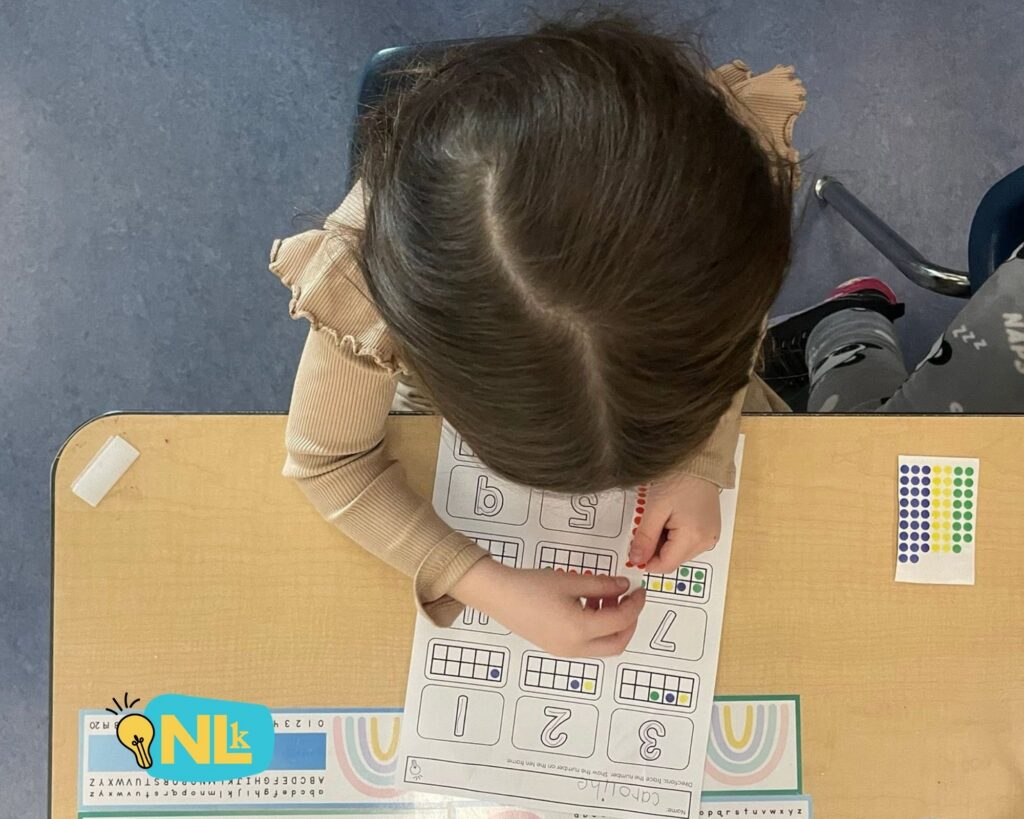
Number sense is the “why” behind the numbers. It’s understanding that 7 is more than 5, that 10 can be broken apart into 6 and 4, and that numbers represent real quantities you can touch, group, and compare. This is where building number sense really starts to shape how a child thinks about math for years to come.
5. Addition and Subtraction
Kindergartners aren’t doing worksheets full of equations just yet…they’re building an intuitive sense of joining and separating small numbers using objects, fingers, and pictures. Simple addition and subtraction within 10 (or even within 5, to start) lays the groundwork for basic addition fluency in first grade.
6. Place Value
Place value in kindergarten is early and concrete: understanding that “teen” numbers (11–19) are made of ten ones and some extra ones. It’s an early exposure to a concept students will lean on heavily in second grade and beyond.
7. Geometry and Shapes
Kindergartners explore both basic shapes (circles, squares, triangles) and start noticing different shapes in their everyday life — a stop sign, a picture frame, a slice of pizza. They also begin comparing two-dimensional shapes to more complex shapes and describing their attributes (sides, corners).
8. Measurement and Data
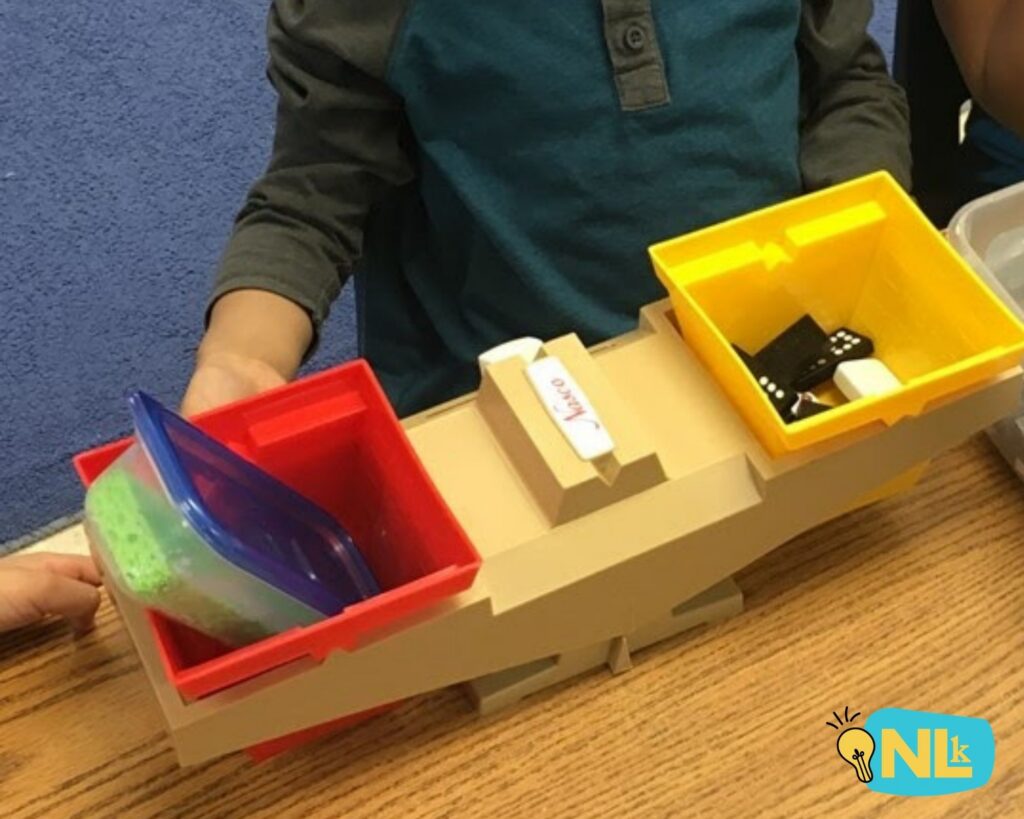
This is where kids compare different lengths, sort objects, and start collecting and organizing simple data like counting how many classmates prefer pizza over tacos and turning it into a simple graph or weighing two different objects (a hands-on way to teach nonstandard measurement and weight comparison) to learn the concepts of heavier or lighter.
Freebie: Kindergarten Math Skills Scope and Sequence
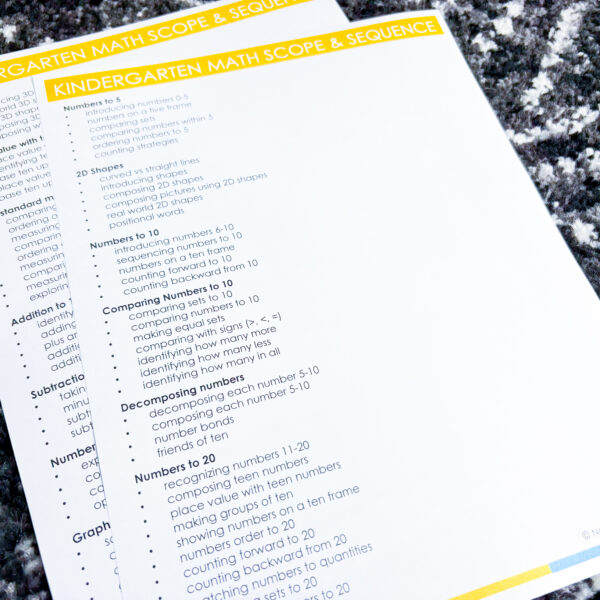
If you’re feeling overwhelmed by that list (the way I felt the same way staring those IKEA dresser instructions), I put together a free kindergarten math skills scope and sequence to help. It lays out these foundational math skills in a logical teaching order, month by month, so you’re never guessing what comes next.
Do you love free stuff?
Kindergarten Math Skills Scope & Sequence
Not sure exactly which math skills your students need to master and when? This free scope & sequence breaks down every kindergarten math skill in teaching order, so you can plan your year with confidence.
The Best Way to Teach Kindergarten Math Skills
Knowing what to teach is half the battle. Here’s how to actually teach it in a way that sticks.
Guided Math Routine
A consistent guided math routine — whole group mini-lesson, small group instruction, and independent practice — gives structure to your math instruction without requiring you to reinvent your day. Kids thrive on routine, and a predictable math block means less time explaining expectations and more time actually teaching.
Hands-On Activities and Games
Young children learn math best when they can touch it. Counting bears, dice, dominoes, and building blocks turn abstract number sense into something concrete.
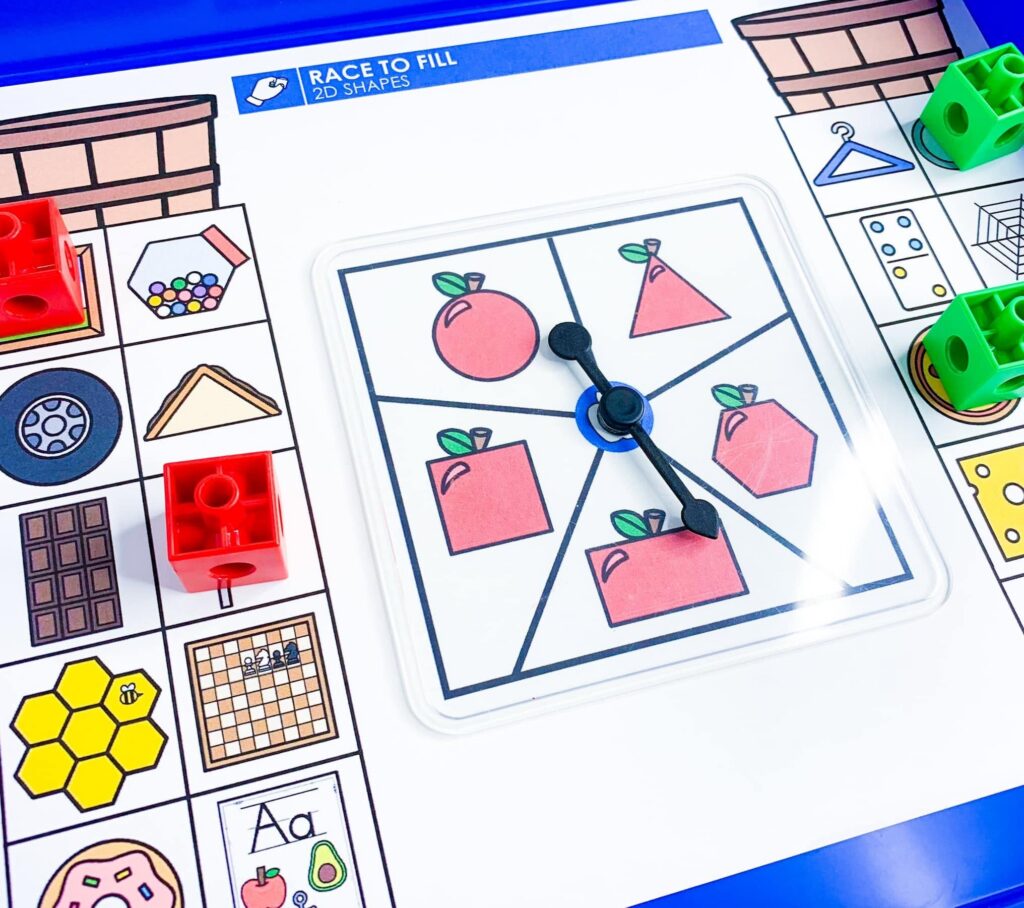
Board games and card games are also secretly powerful math tools — they build counting, number recognition, and even early logical thinking without feeling like “school.”
Math Centers
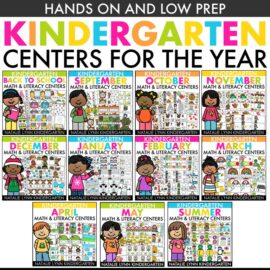
Math centers let you rotate small groups through hands-on activities and creative play while you pull kids for small group instruction. This is one of the most efficient ways to differentiate without adding hours of prep to your week.
Small Groups
Small group instruction is where you can meet kids exactly where they are — reinforcing a skill with a student who needs extra support, or stretching a student who’s ready for larger numbers or more advanced concepts. It’s also your best window for quick, informal assessment.
Follow a Scope and Sequence
Teaching foundational math concepts out of order (or all at once) is a fast way to lose your kindergarten classroom. Following a scope and sequence — like the freebie above — means each new skill builds naturally on the last, instead of leaving gaps that show up later.
Common Challenges When Teaching Kindergarten Math
Even with a great routine, a few challenges show up in almost every kindergarten classroom:
- Wide skill gaps. Some kindergartners walk in already counting to 100; others are just learning to recognize numbers. Meeting both in the same math class takes real differentiation.
- Short attention spans. Long, abstract math instruction loses young learners fast. Shorter, hands-on bursts work better than long lecture-style lessons.
- Math anxiety, even this early. Kids pick up on frustration quickly. Keeping instruction low-pressure and game-based protects their confidence in those first steps.
- Limited instructional materials. Not every classroom has a fully-resourced math program, which means teachers often patch together their own everyday activities and manipulatives.
How to Differentiate Math Skills in Kindergarten
Differentiation doesn’t have to mean five different lesson plans. A few practical ways to differentiate in kindergarten math:
- Adjust the numbers, not the activity. The same counting game can use smaller numbers for one student and larger numbers for another.
- Let students work at their own pace during math centers, rotating based on mastery rather than the clock.
- Use everyday situations — the grocery store, the classroom line, snack time — as built-in differentiation, since real-world math naturally meets kids where they are.
- Build in extra support stations for students still solidifying one-to-one correspondence, while others move into early addition and subtraction.
Kindergarten Math Curriculum Overview
If you’d rather not build your guided math routine from scratch, my Kindergarten Math Curriculum: Guided Math Units covers every skill in this post — number recognition, counting, number sense, addition and subtraction, place value, geometry, and measurement — with ready-to-teach guided math units, hands-on activities, and small group resources built in. It’s designed to take the guesswork out of your kindergarten math skills checklist so you can focus on teaching, not lesson planning at 9pm.
Kindergarten math doesn’t have to be complicated. With the right foundational skills taught in the right order and a routine that supports all your learners, it really can be that simple.