In this blog post: Get advice from real kindergarten teachers who’ve been there and find a free kindergarten teacher survival guide.
Here’s something I don’t talk about enough: I almost said no to kindergarten.
When my first grade position was cut, I had a choice: stay in first grade or move to kindergarten. I chose kinder. But I want to be honest with you: I was terrified. In the past, I had actually told people I would never teach kindergarten. And then suddenly, there I was.
It turned out to be the best decision I’ve ever made. But those first weeks? I had so many questions and nobody had really prepared me for what actually happens in a kindergarten classroom.
And this is something I find is SO common with new kindergarten teachers – we all have an idea of what it will look like (whether that’s good or bad), but rarely are we hearing about the reality of being a new teacher in a kindergarten classroom.
So I asked a community of experienced kindergarten and early elementary teachers: What do you wish you’d known as a new kindergarten teacher?
The answers poured in, and they were SO good. In this blog post, I’m sharing the most important ones, along with a few things I’ve learned myself after years of teaching kindergarten.
Whether you’re a first year kindergarten teacher or switching grade levels, this one’s for you.
Assume a Blank Slate For Everything
One of the most repeated pieces of advice from veteran teachers? Don’t assume your kindergarten students know anything about being in school even if they’ve been in preschool.
One teacher put it perfectly: “Assume they have no experience and are a blank slate. Even if they’ve used scissors before, they’ve never used scissors in your classroom.“
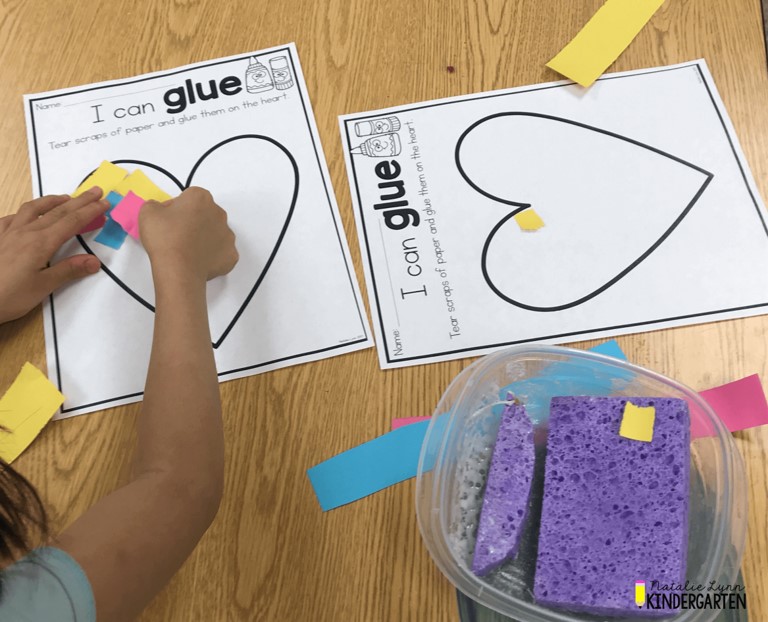
It’s not about doubting your students. It’s about honoring the fact that your classroom has its own rhythms, its own clear expectations, its own way of doing things. And none of them have been here before.
What does this look like during the first week? Teaching how to:
- Hold a pencil (triangle pencils are a game-changer for immature grasps and developing fine motor skills)
- Sit in a chair (yes, I’ve had students who have never used a chair before)
- Color all the way in. Model it explicitly
- Sit at the carpet, line up, and transition between activities
- Use glue without creating an abstract art installation on the table
These aren’t small things and you’re absolutely not wasting time spending the first few weeks of school focusing on them. They’re the building blocks of your classroom community and your daily schedule for the entire year. Start from zero. You’ll build so much faster.
Go Slow to Go Fast
If there’s one theme that showed up in almost every single teacher’s response, it’s this: slow down at the beginning.
Nicole B. said to follow the age-old advice: “Go slow to go fast later.”
Cindy H. agreed: “Invest the time to go slow, and establish routines. Don’t be afraid to go back to the beginning.“
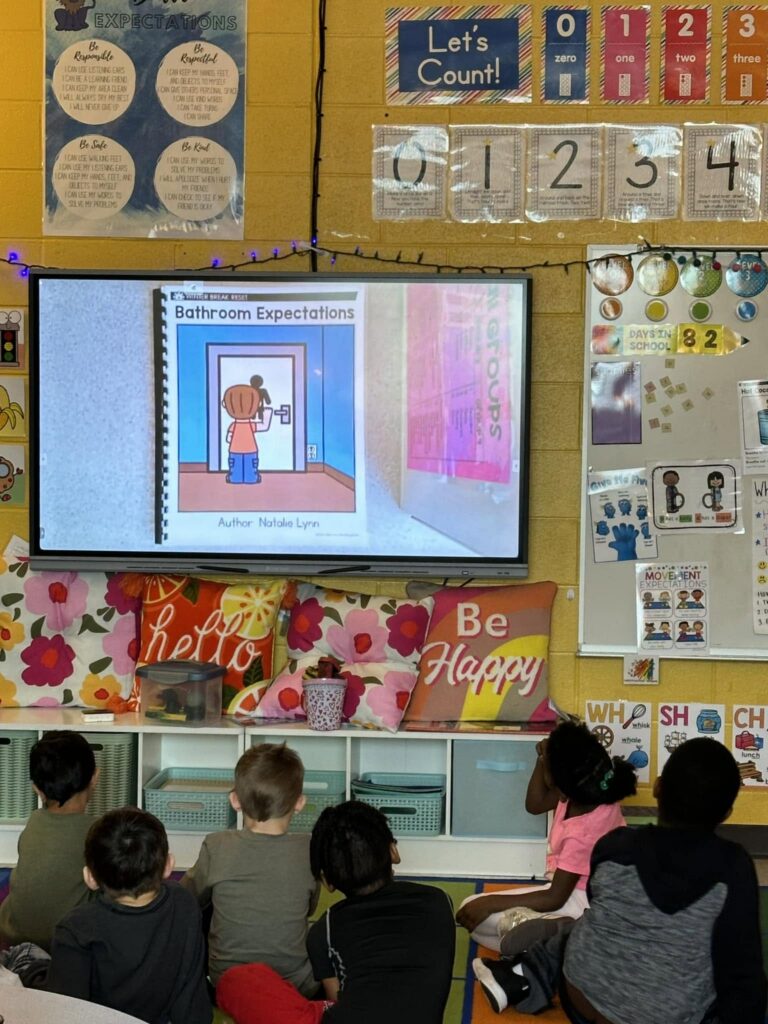
We’re talking about weeks of intentional routine-building before you even touch the curriculum. At least two weeks…and some veteran teachers said the first couple of months. That means practicing everything over and over again.
- Lining up
- Putting supplies away
- Walking to the bathroom
- Transitioning between learning centers and activities
- Following your daily schedule from start to finish
It feels slow. It might even feel like you’re falling behind. YOU ARE NOT FALLING BEHIND.
It can be tempting to jump into lesson plans and educational requirements. Especially as a first time teacher wanting to prove themselves.
But every hour you spend building daily routines in September is an hour you’ll get back — times ten! — in February. By the end of the year, your students can run the classroom. That independence doesn’t happen by accident. It happens because you built strong relationships with your students and took the time to set clear goals and clear expectations from day one.
Amanda B. summed it up beautifully: “Take time in the beginning of the year to establish routines and procedures. It helps build a successful school year.“
Ready to Start Your Classroom Adventure?
If you’re feeling overwhelmed heading into your first day of school, I’ve got something for you. Sign up for the free Kindergarten Survival Guide — you’ll get 5 emails (and lots of freebies) delivered to your inbox to help you start your new classroom adventure with confidence!
→ YES, I WANT THE KINDERGARTEN SURVIVAL GUIDE
Introduce Phonemic Awareness and Letter Sounds First
This one surprised some of the newer teachers in the group, but experienced kindergarten teachers know: the sequence matters.
Traci K. said: “Establish rules and procedures first. Then when curriculum starts, start with phonemic awareness first, then letter sounds, last letter names.”
Natalie S. added: “Don’t stress about getting kids to be able to read as quick as possible. Take the time to lay the essential groundwork (letter sounds, phonics, etc.). In the end, this makes better readers.”
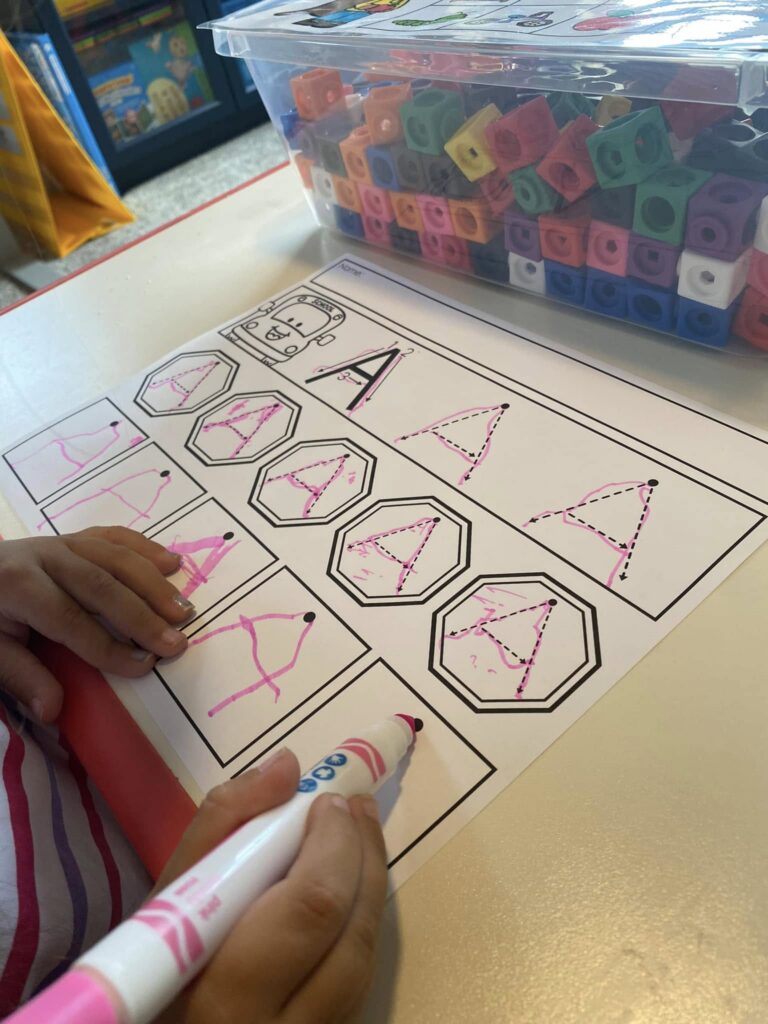
This is one of the most important things the Science of Reading has taught us. Phonemic awareness, the ability to hear and manipulate sounds, is the foundation everything else is built on. Kids who skip that foundational skill often struggle later.
Slow, intentional, sequential instruction in foundational skills isn’t wasted time. It’s building the strong foundation that makes everything else click. And it’s one of the best ways to support your young students’ needs right from the start — no matter where they’re entering from grade level.
Review, Review, Review!
You taught it. You’re sure of it. Then you come back to it two weeks later and it’s like you never mentioned it.
Welcome to kindergarten. 😂
Kathy L. accepted this truth and made peace with it: “Review previously taught skills constantly throughout the year. Yes, they will forget.”
This is not a reflection of your teaching. Young students need repetition. Their brains are doing an enormous amount of work just navigating the school day, let alone retaining new academic skills.
Here’s what the research actually says: when kids ages 6–12 practiced a procedural task three times in a row, they got faster and better at it each time. Kindergarteners need the most repetition of all to reach the same automaticity an older student would hit more quickly. So when your students look at you like you’ve never taught them how to line up? You haven’t failed them. Their brains are just doing exactly what five-year-old brains are supposed to do.
Build spiral review into your daily routines. Revisit skills in morning meetings, in learning centers, and in small groups. Vary how you practice. Use a variety of physical activity, hands-on experiences, and games because young learners with short attention spans retain more when skills show up in different ways.
And don’t worry! Stacey A. has been there, and she knows: “They will get it with practice!!”
Your Class Will Never Be the Same Twice
Something that trips up even experienced teachers when they switch to teaching kindergarten: what worked last year might not work this year.
“Know that you need to always have different behavior incentives to use because you will NEVER have the same class year to year!” — Lizzie A.
This is especially true for classroom management. The behavior plan that had last year’s class in line may do nothing for this group. The incentive that motivated one class may completely flop with the next.
The teachers who thrive in early childhood education are the ones who stay flexible and pay attention to what this group of young children needs. They honor their emotional development, their social skills, and their students’ needs and don’t just rerun last year’s playbook.
That also means differentiating within your classroom. Use visual cues when giving directions. Have an example of every activity visible before students begin. Build in physical activity and movement, because young learners engage and retain more through hands-on experiences. And remember: problem-solving skills and social skills develop right alongside academic ones in kindergarten. Both matter.
Stay curious about your students. Every class will teach you something new.
Give Yourself (and Your Students) Grace
I’m going to say something that took me longer to learn than I’d like to admit: Focus on ONE thing at a time that you want to master. Not ALL the things. Not the perfect classroom community AND the perfect literacy block AND perfect behavior management all in the same week. One thing.
Lizzie H. said it so well: “Give yourself (and your students) grace. Celebrate every win, big or small.” Monica S. had good advice too: “Trust yourself as a professional and be flexible and open to learning new things. Keep an open mind and heart because you learn so much in the moment.”
The beginning of kindergarten is a lot…for your young students and for you. Some days you’ll go home thinking you have no idea what you’re doing. Some days you’ll wonder why you chose this grade level.
And then a kid will read their first word, or give you an unprompted hug, or finally figure out how to line up quietly, then you’ll remember.
This is a special grade. You chose a special grade. And you’re going to be really good at it!
Ready to Start Your Classroom Adventure?
If you’re feeling overwhelmed or unsure where to start, I’ve got something for you. Sign up for the free Kindergarten Survival Guide — you’ll get 5 emails (and lots of freebies) delivered to your inbox to help you start your new classroom adventure with confidence!
YES, I WANT THE KINDERGARTEN SURVIVAL GUIDE →
Save this post! You’ll want to come back to it during those first few weeks when everything feels like a lot. (And it will feel like a lot. That’s normal. Keep going.)
Do you love free stuff?
New Kindergarten Teacher Survival Guide
Feeling overwhelmed as a new kindergarten teacher? Sign up for the free Kindergarten Teacher Survival Guide. It’s a 5-email series packed with tips and freebies to help you start your kindergarten classroom adventure with confidence.