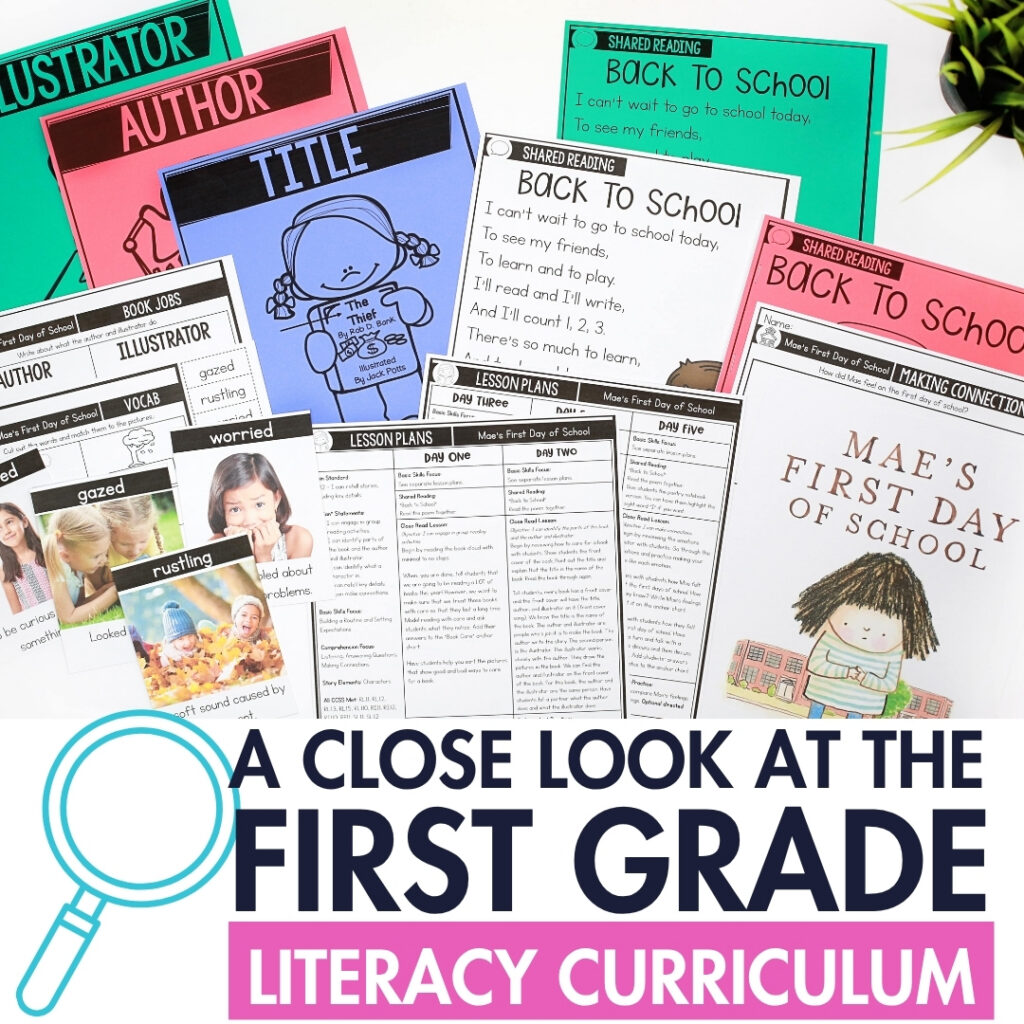
In this blog post: Take a closer look at the components of the Empowering Little Readers First Grade Literacy Curriculum. Discover what’s included and how to best use this literacy curriculum in your 1st grade classroom.
It’s no secret that teaching literacy in First Grade is a BIG task.
There are so many skills and topics to fit in to get our students from point A to point Z. Comprehension skills, phonemic and phonological awareness, vocabulary, grammar… how do we fit it all in and make it flow together?
When I began writing the Empowering Little Readers First Grade Literacy Curriculum, my goal was to make teaching literacy as easy and opening a book. Each week is centered around a single read-aloud, which might not seem like a lot. But so much literacy instruction is able to be tied to that one read aloud as an anchor.
What’s included in the first grade literacy curriculum?
My goal was to make the Empowering Little Readers First Grade Literacy Curriculum a “one stop shop” for literacy instruction. I wanted you to be able to get as much impact as possible out of a short time.
Because of that, I packed this curriculum with possibly more than you’ll be able to use – and that’s okay! I would rather you be overprepared than underprepared.
In this blog post, we’ll take a closer look at each component of the first grade literacy curriculum, what it will look like, how much time it will take, and when you may want to skip it all together.
Phonological and Phonemic Awareness
Each week includes separate phonological and phonemic awareness lesson plans (at the beginning of August this is replaced with a Basic Skills focus).
Phonological and phonemic awareness skills covered throughout the year include:
- hearing, identifying, and producing rhyming words
- counting, segmenting, and manipulating syllables
- isolating and distinguishing between sounds
- compound words
- onset and rime
- blending and segmenting 2, 3, and 4 phoneme words
- phoneme substitution, deletion, and reversal
This portion of the lesson plan should ideally only take 2-3 minutes per day.
However, if you are already teaching phonological and phonemic awareness in another part of your day – for example, during your phonics curriculum or in small groups – you may want to skip this part of the lesson plans. Research shows that just a few minutes of phonemic awareness instruction daily is all you need for the biggest impact.
Shared Reading
Shared reading will revolve around reading a poem matching the weekly theme each day. Each week includes an original poem written by me.
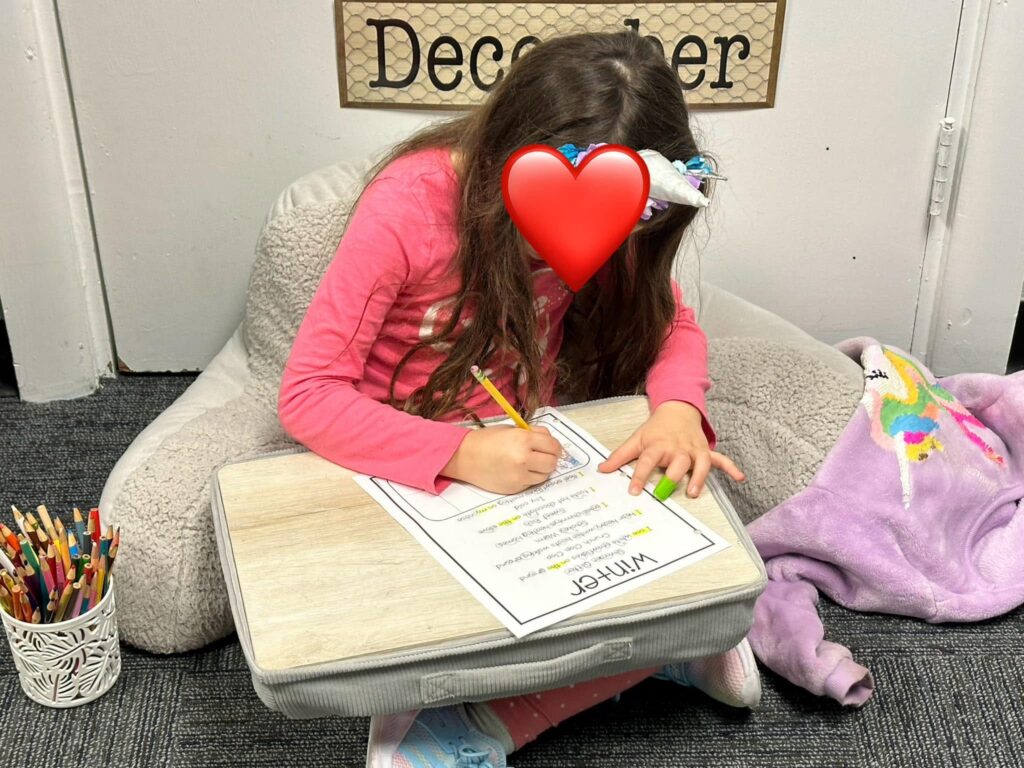
This part of your lesson can be as simple as reading the poem together each day or you can follow the lesson plans and have students create their own poem books and poetry notebooks.
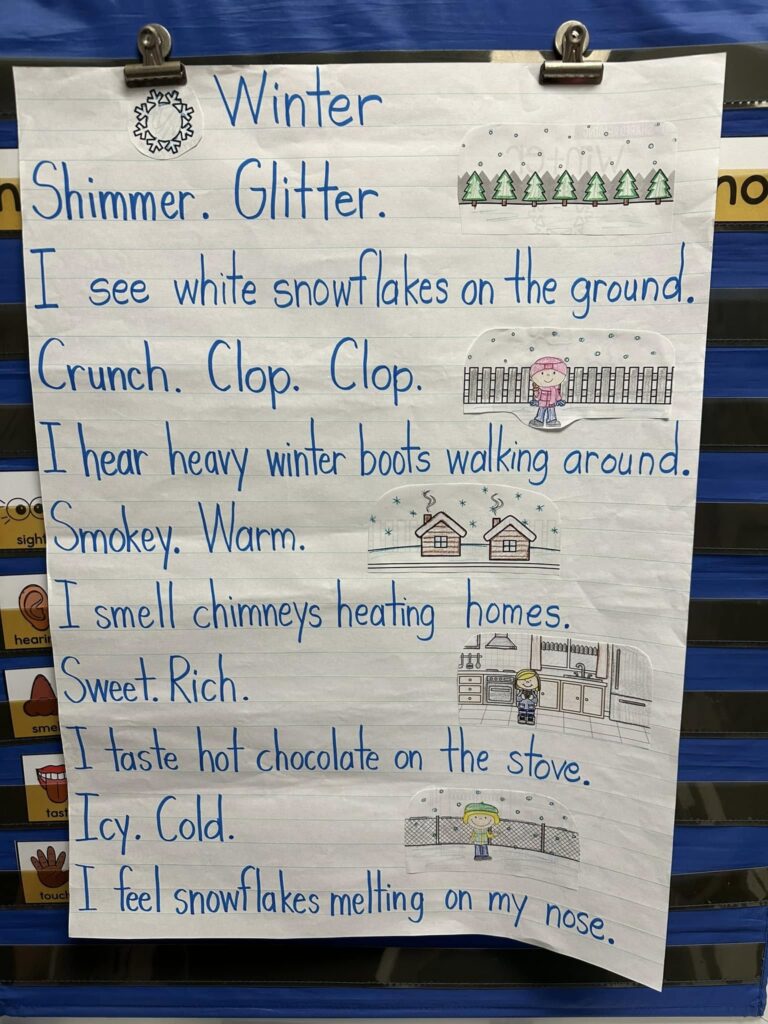
Most days this part of your routine will take just 1-2 minutes, but it will take a bit more time on Wednesdays and Fridays if using the included poem readers and poetry notebook page.
Many teachers wonder when to fit shared reading into their day.
This is an easy routine to add into your morning meeting time! In my classroom, this looked like:
- greeting, deep breathing exercise, and share time
- morning message
- shared reading with our poem
- sound chart routine
- brain break
Close Read Lesson
Now it is time to for the close read lesson with your interactive read aloud. This portion of your lesson will revolve around the same picture book for the majority of the week.
This will be the meat of your lesson and will take about 15 minutes depending on the length of the book and discussion.
Many teachers wonder if their students will get bored of the same book each day, but that hasn’t been my experience!
By reading the same book throughout the week, it take some of the mental load off students and allows them to view the story through different lenses each day as you target different skills.
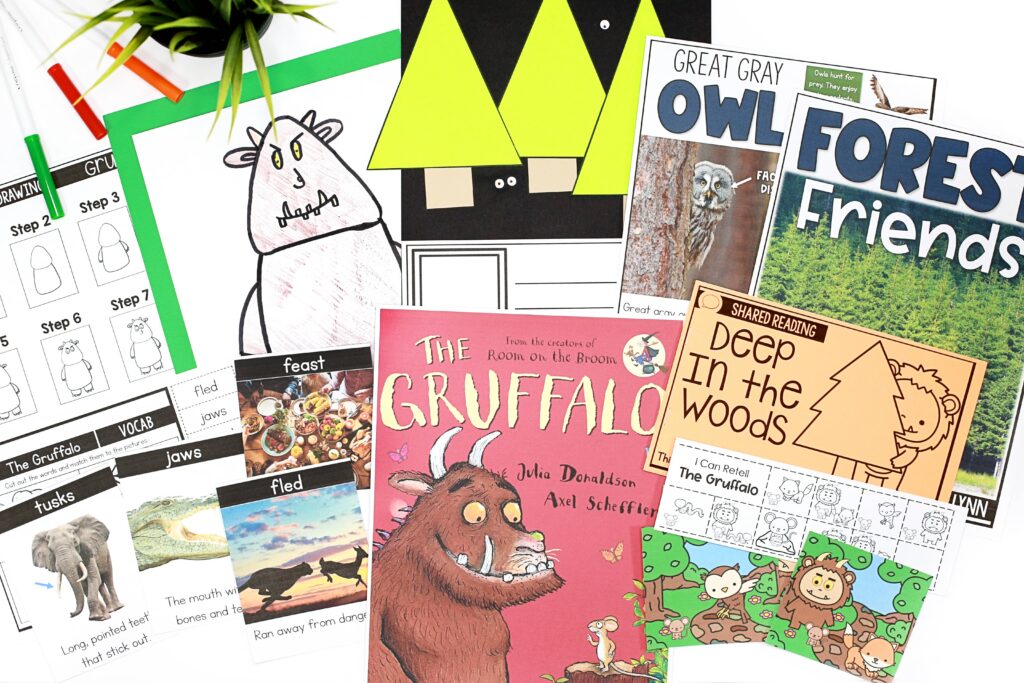
This part of the lesson will look like:
- introducing the read aloud and our objective for reading today
- reading the story
- discussing the story based on the comprehension skill you are targeting for the day
Comprehension skills will spiral throughout the year, but each month will have a more specific overall comprehension skill it is focusing on.
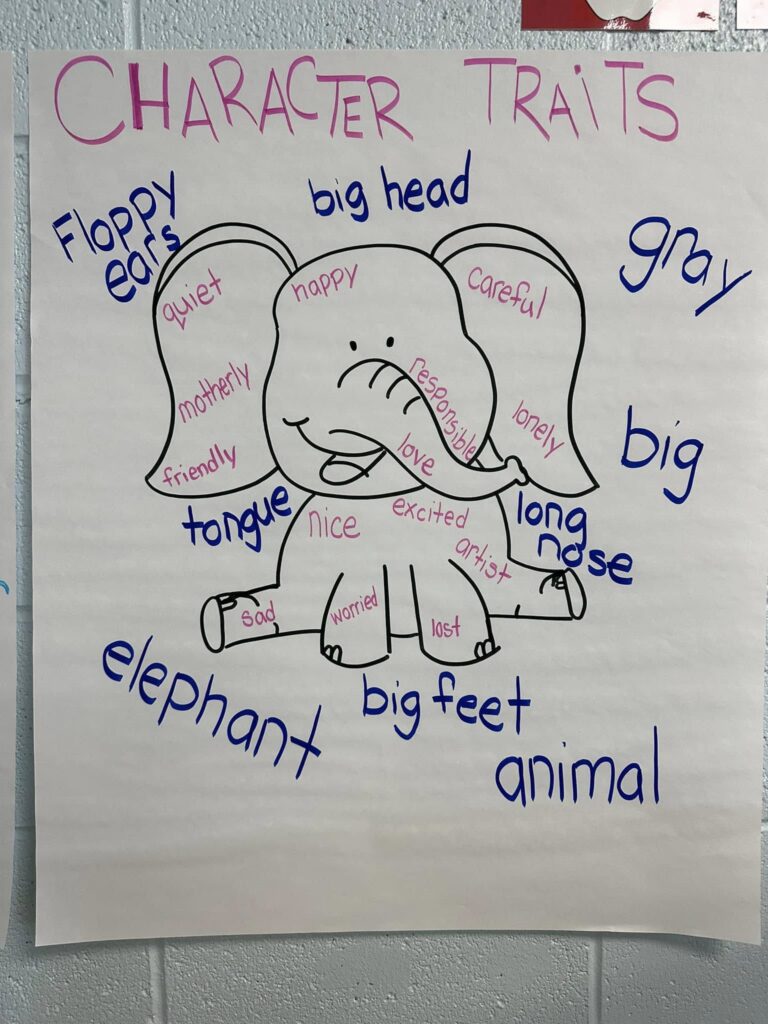
Some of the comprehension skills focused on throughout the year include:
- characters, settings, and how they change
- sequencing events in a story
- problem and solution
- character feelings and how they change
- central message or lesson
- character traits
- comparing and contrasting
- nonfiction text features
- asking and answering questions about a text
- author and illustrator choices
- inferring
- cause and eggect
- summarizing
- visualizing and sensory words
- fairy tales, folktales, and comparing tales
- nonfiction research
- text evidence
- biographies and timelines
- point of view
- poetry and poetic devices
- author’s purpose
- making connections
Nonfiction Read Aloud
On Thursdays, the picture book is replaced by a nonfiction text related to the topic. The nonfiction books are all included in this curriculum and were written by me.

The purpose of the weekly nonfiction text is to build background knowledge and help students better understand the fiction read aloud.
It also gives students a chance to practice nonfiction text comprehension skills like identifying the main topic, retelling key details, and gathering information each week.
Independent Practice
The close read discussion will then lead into the independent practice portion of the lesson. This looks like responding to the text through writing, usually to answer a question based on the comprehension focus.
This is not meant to take the place of your writing instruction during the day! It is just meant to add in more writing practice in a meaningful way.
At the beginning of the year, students may just be illustrating their answers. That is okay! Later in the year, they will be asked to write more and shown how to expand their answers.
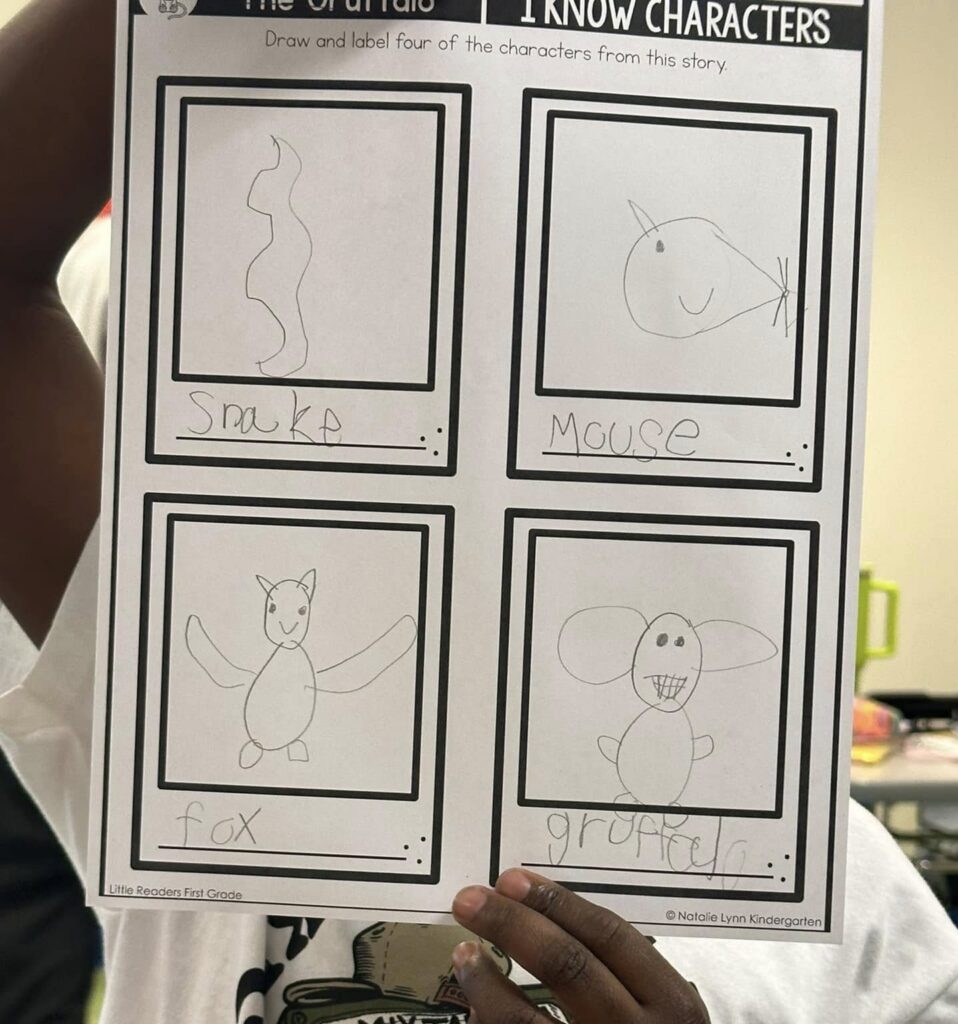
For some students, this portion of the lesson may only take a minute or two. For your perfectionists, it may take a bit longer.
To manage this, I personally made this their “ticket to centers.”
Students would complete the writing portion and then show it to me to get a smelly marker smile. Once they did, they could put it in their cubby and go start centers. [Read more about how I run independent centers here].
This kept our day moving and students engaged and learning without putting a time pressure on other students.
Vocabulary
Each week will include instruction based on 4 vocabulary words from the text. Each word has an associated motion to help students better understand and remember the definitoin.
Again, this portion of your lesson can be as simple or as in-depth as you want.
It can be as simple as introducing or reviewing the vocabulary words each day including the motions and definitions. This would take about 1-2 minutes each day. In this case, I would complete the vocabulary part of the lesson right before the read aloud.
Or you can complete the vocabulary activity each day which includes a worksheet portion where students will illustrate, match, or use the words in a sentence.
Weekly, this would look like:
- Monday: introduce the vocabulary words, definitions, and motions
- Tuesday: review two words and illustrate them
- Wednesday: review two words and illustrate them
- Thursday: match vocabulary words to pictures
- Friday: use each word in a sentence
This will take a bit more time. In this case, you can complete the vocabulary lesson before the read aloud and have students go back to their seat, complete the worksheet, and then come back.
Or you can review the words before the read aloud but make the worksheet an activity to complete later in the day, possibly during your literacy centers. Materials are included to make vocabulary notebooks, which may be a good center option for you.
Mentor Sentence and Grammar
Grammar is such an important part of literacy instruction, but I hear from teachers almost daily who aren’t sure how to fit it into their days.
My goal by combining mentor sentences and grammar instruction is to give you powerful grammar mini lessons that will take just 2-3 minutes a day.
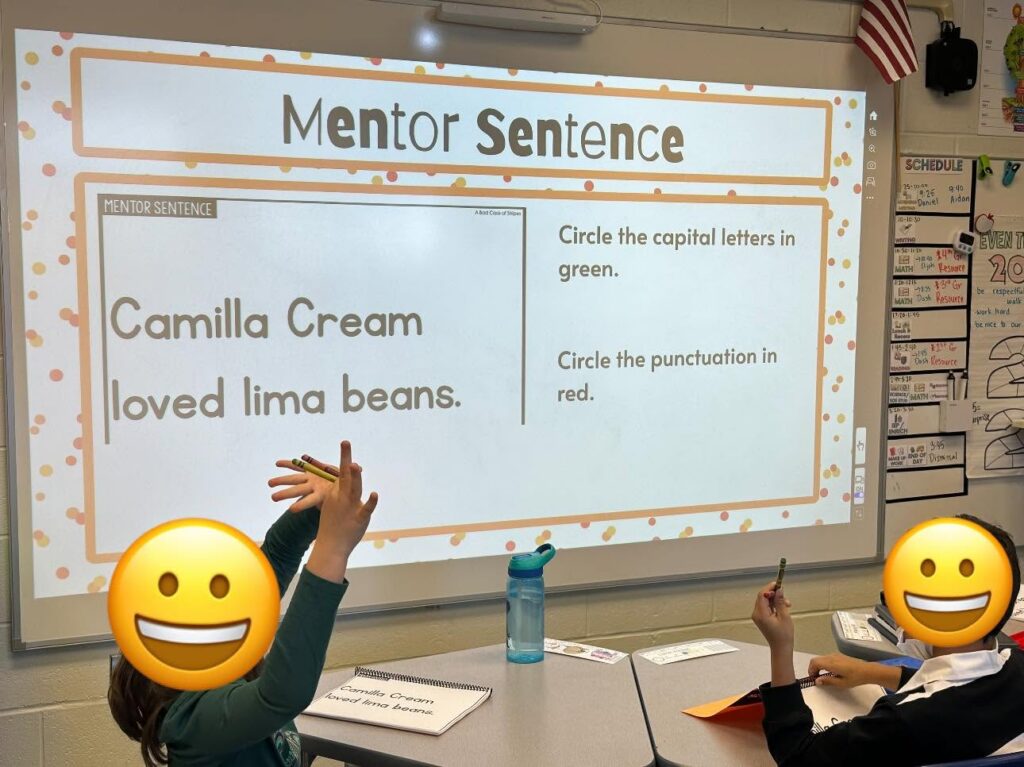
Each week will ask students to identify parts of speech within the mentor sentences. This uses a technique borrowed from Montessori that helps students better connect and remember those parts of speech.
The weekly routine looks like:
- Monday: Read the sentence. Find the capital letter and punctutation.
- Tuesday: Read the sentence. Complete the mixed up sentence.
- Wednesday: Read the sentence. Edit the sentence.
- Thursday: Grammar mini lesson
- Friday: Grammar mini lesson

Grammar topics covered throughout the year include:
- parts of speech
- sentence features
- punctuation
- plural nouns
- subject-verb agreement
- common and proper nouns
- pronouns
- irregular plurals
- synonyms and antonyms
- shades of meaning
- suffix -ed and -ing
- verb tense
- dates
- commas
- conjunctions
- compound sentences
- homophones and homonyms
- affixes
This portion of your day can be fit in anytime you have a few minutes – at the beginning, middle, or end of your day.
Ready to take the leap?
Make teaching literacy the easiest part of your day! The Empowering Little Readers First Grade Literacy Curriculum makes it easy with explicit, meaningful instruction based around interactive read alouds.